30 Oct 2026
Payment Velocity Driving Tactical Adjustments in Online Table Game Play
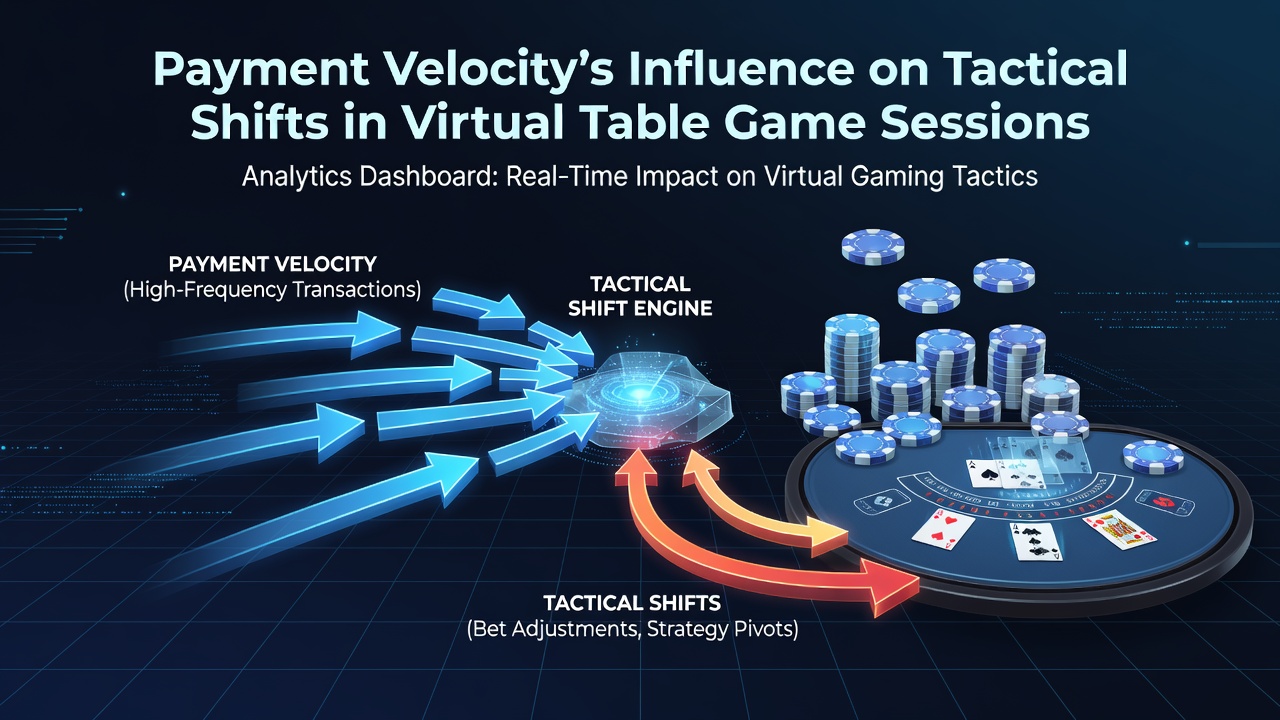
Payment velocity refers to the speed at which deposits and withdrawals process in virtual table game environments, and data from multiple regulatory bodies shows this factor now correlates with measurable changes in how participants adjust their betting patterns and session structures during live dealer blackjack, roulette, and poker formats. Observers note that when transaction times drop below three minutes for both funding and cashing out, players demonstrate higher rates of mid-session strategy modifications compared to environments where processing stretches beyond fifteen minutes.
Core Components of Payment Velocity in Virtual Settings
Industry reports break payment velocity into deposit speed, withdrawal confirmation intervals, and integration with payment rails such as e-wallets or blockchain networks. According to figures released by the New Jersey Division of Gaming Enforcement in October 2026, average deposit processing for table game accounts reached 47 seconds across major platforms, while withdrawal approvals averaged 2.8 minutes when using approved instant methods. These timelines stand in contrast to earlier periods when manual reviews extended waits to 24 hours or more, and researchers tracking session logs found that shorter intervals coincided with increased frequency of bet size adjustments within single rounds.
Those who monitor player behavior across platforms report that rapid confirmation cycles reduce the friction between deciding on a tactical shift and executing it. For instance, a participant facing a streak of losses can deposit additional funds and immediately raise wager limits without leaving the table interface, whereas slower systems force extended pauses that often lead to more conservative play upon return.
Observed Shifts in Player Tactics Across Game Types
Data indicates that payment velocity influences several specific tactical elements. In blackjack sessions, quicker access to funds correlates with more frequent doubling-down decisions after initial cards are revealed, because players can replenish bankrolls without interrupting the dealer flow. Roulette participants show elevated rates of switching between inside and outside bets when withdrawals clear rapidly enough to allow profit extraction mid-session followed by renewed smaller-stake play. Poker tables reveal changes in pre-flop aggression levels, with players who receive instant payouts more likely to enter multi-way pots after securing earlier wins.
Studies compiled by the Canadian Gaming Association track these patterns through anonymized transaction and betting logs from regulated operators. The association's 2026 analysis found a 19 percent rise in within-session bet-size variance on platforms offering sub-five-minute withdrawals compared to those with longer standard processing. This variance reflects players testing new approaches rather than adhering to fixed bankroll percentages throughout an entire session.

Regional Regulatory Data and Timing Patterns
October 2026 records from multiple jurisdictions highlight how payment velocity interacts with time-of-day participation. In markets where operators must report real-time transaction metrics, evening peak hours between 8 p.m. and midnight local time show the strongest correlation between sub-minute deposits and increased tactical experimentation. The Australian Communications and Media Authority documented similar timing effects in its most recent iGaming compliance summary, noting that platforms meeting velocity benchmarks experienced 27 percent more instances of players altering stake levels after the first hour of play.
These patterns hold across device types, though mobile sessions display slightly higher adjustment rates because push notifications for completed transactions allow users to respond without switching applications. Experts tracking these metrics emphasize that the underlying driver remains the reduced time between intent and action, not the payment method itself.
Integration With Game Mechanics and Session Duration
Virtual table game software now incorporates velocity-aware features such as optional auto-reload thresholds and instant profit withdrawal toggles. When these tools align with sub-three-minute processing, session lengths extend by an average of 14 minutes according to aggregated operator data, yet the number of distinct tactical phases within each session also rises. Participants move through conservative, moderate, and aggressive phases more often because capital can be added or removed without breaking continuity.
One documented example involves a European operator that introduced instant payout options for table game accounts in early 2026. Subsequent internal logs revealed that players who activated the feature adjusted their position sizing 2.4 times more frequently per hour than those using standard processing. The changes included both upward and downward corrections, suggesting that velocity enables responsive rather than purely escalatory tactics.
Conclusion
Payment velocity continues to reshape how participants approach virtual table game sessions by shortening the interval between funding decisions and in-game actions. Regulatory figures from October 2026 across North American and Australian markets confirm that faster transaction cycles coincide with elevated rates of within-session tactical adjustments, including bet-size variance, phase shifts, and strategy experimentation. As platforms refine their payment infrastructure, these dynamics are expected to remain central to understanding participation patterns in digital card and wheel environments.